8 mins read
The No-Marketing-Team Buyer's Journey: How B2B Founders Can Map, Own, and Convert AI-Discovered Prospects Without a Single Internal Marketer
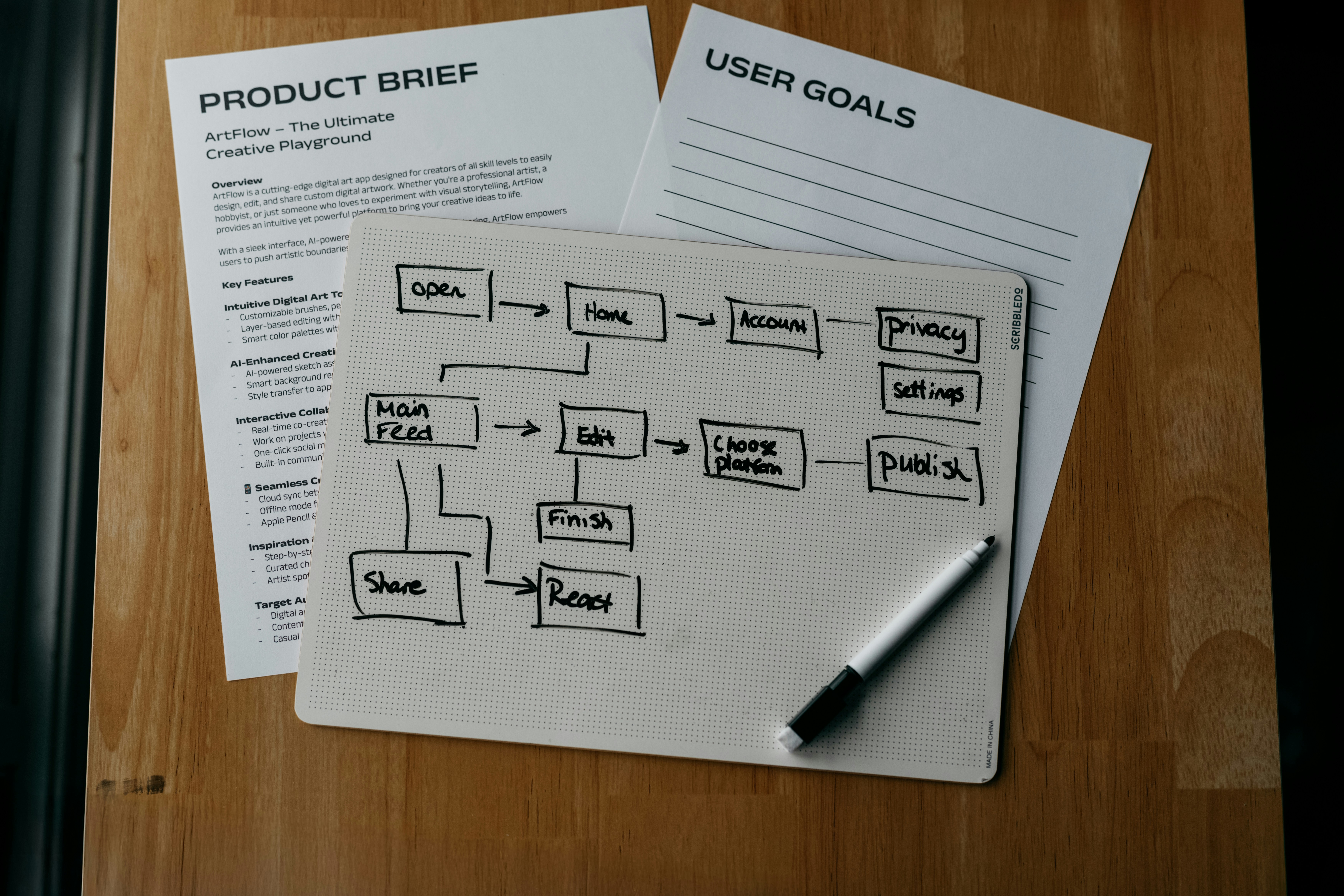
Most B2B founders lose deals not because their product is weak, but because they are invisible at the moment a buyer is forming their shortlist. In 2026, that moment increasingly happens inside ChatGPT, Perplexity, or Google AI Overview, not on a Google search results page. B2B buyer journey mapping, done right, shows you exactly where that invisibility begins, which stages of the buying process you are absent from, and which actions will put you in front of the right buyer at the right moment. The challenge is that traditional mapping assumes you have a marketing team to act on the insights. This article is for founders who do not.
TL;DR
The B2B buyer journey now runs through AI models before it ever touches your website, so mapping it means understanding what buyers ask ChatGPT, not just what they type into Google.
Founders without marketing teams can still own every stage of the journey by knowing which platforms LLMs cite and publishing content that gets picked up there.
Outsourced B2B marketing that covers both strategy and execution is the only realistic path for resource-constrained founders who need to move fast.
Lead identification technology can surface exactly who visited your site from an AI referral, turning anonymous traffic into actionable pipeline.
The compounding effect of AI visibility means that early movers build durable advantages that late movers cannot easily buy their way out of.
About the Author: Simaia is an agentic marketing team built specifically for B2B companies that want to be found by buyers using AI search tools. With hands-on experience running AI visibility playbooks for clients across APAC, Simaia has grown client AI search visibility from 0% to 45% in under three months and generated 10x increases in inbound leads for manufacturers with no internal marketing function.
What Does the B2B Buyer Journey Actually Look Like in 2026?
The B2B buyer journey is the sequence of steps a buying group takes from recognising a problem to signing a contract [hyphadev.io]. What has changed is where that sequence begins.
Buyers in 2026 increasingly open a conversation with an AI model before they open a browser tab. They ask ChatGPT to explain their problem, ask Perplexity to compare vendors, and consult Google AI Overview to validate a shortlist they have already formed. By the time they visit your website, much of the decision architecture is already in place [thesmallbusinessexpo.com]. The journey now has an invisible pre-awareness phase that most founders are completely absent from.
Traditional journey models describe three core stages: awareness, consideration, and decision [hyphadev.io]. A modern mapping exercise needs to add a fourth stage before awareness: the AI discovery phase, where a buyer types a problem into an LLM and receives a vendor recommendation before they have consciously begun "searching" at all [deeto.com].
Why Do Most Founder-Led B2B Companies Fail at Journey Mapping?
Building on the shift described above, the harder question is not whether founders understand the journey exists, but whether they have the infrastructure to do anything about it.
The honest answer is that most do not [stage2.capital]. Journey mapping is frequently treated as a marketing department exercise requiring collaboration across sales, customer success, and product teams [goconsensus.com]. Founders running lean operations lack the bandwidth to gather that cross-functional input, let alone act on it.
Three specific gaps are common:
No systematic buyer research. Founders rely on anecdote rather than structured interviews or data about how buyers articulate their problems at each stage [fullfunnel.io].
No content engine. Even when gaps are identified, there is no one to write the content that fills them.
No visibility into AI referral traffic. Google Analytics shows sessions; it does not show which buyers arrived because an LLM recommended you.
The result is that mapping exercises produce slide decks, not pipeline. The founders who close this gap are not the ones who hire faster. They are the ones who treat outsourced B2B marketing as a full operating function, not a tactical content vendor.
How Should a Founder Map the AI-Era Buyer Journey Without a Marketing Team?
Effective B2B buyer journey mapping is the process of documenting every question a buyer asks, every source they consult, and every friction point they encounter, then matching content and outreach to each point [emlen.io].
For a founder without marketing staff, a practical mapping process looks like this:
Identify the buying group, not just the buyer. B2B purchases typically involve multiple stakeholders [highspot.com]. List the job titles involved in approving your category of purchase.
Map the questions, not the stages. For each stakeholder, write out the actual questions they would type into an LLM at each stage of awareness, consideration, and decision [fullfunnel.io]. These questions become your content brief.
Audit where you appear in AI answers today. Run your category's top questions through ChatGPT, Gemini, Claude, Perplexity, and Google AI Overview. Note where competitors appear and you do not. This is your gap list.
Identify which platforms those LLMs cite. ChatGPT cites LinkedIn frequently. Google AI Overview tends to surface Reddit and high-authority publications. Your content placement strategy follows the citation behaviour of the model, not general SEO logic.
Prioritise the awareness and AI discovery stages first. Buyers who do not find you at the start of their journey rarely loop back. Early-stage visibility compounds; late-stage visibility does not.
What Content Actually Gets You Cited by LLMs?
Stepping back from the mapping process, a separate and equally important concern is what you actually publish.
LLMs do not cite content because it ranks well on Google. They cite content because it is structurally trustworthy: it answers a specific question directly, it is hosted on a domain or platform the model has learned to associate with credibility, and it is written in a format the model can extract cleanly [thesmallbusinessexpo.com].
Practically, this means:
Blog posts that open with a direct, citable definition of the topic
Content placed on LinkedIn, Reddit, or industry publications that LLMs already trust in your category
Press releases distributed to outlets with high domain authority, which both LLMs and traditional search treat as credible sources
Consistent publishing volume, because LLMs weight recency alongside authority
A global textile manufacturer that implemented this approach saw AI bot visits grow from 741 to 2,546 year-over-year, website traffic double in five months, and inbound leads increase from one every two months to five per month.
Frequently Asked Questions
What is B2B buyer journey mapping?
It is the process of documenting every step, question, and decision a buying group takes from problem recognition to purchase, and matching marketing and sales activity to each step [emlen.io].
How has AI changed the B2B buyer journey in 2026?
Buyers now use AI models like ChatGPT and Perplexity to research problems and build vendor shortlists before visiting any website, adding an AI discovery phase before traditional awareness [thesmallbusinessexpo.com].
Can a founder do buyer journey mapping without a marketing team?
Yes, but only if the mapping exercise is connected to execution. Mapping without content production and distribution produces no results.
What is outsourced B2B marketing?
It is the practice of contracting an external team to run some or all of a company's marketing function, including strategy, content creation, distribution, and reporting, in place of internal hires.
How do you get cited by LLMs like ChatGPT or Gemini?
Publish structured, question-answering content on platforms those models already cite in your category, and build domain authority through media placements and consistent publishing.
How do you identify who visited your site from an AI referral?
Specialised lead identification tools can de-anonymise inbound visitors, surfacing company name, individual contact details, and LinkedIn profile so your sales team can follow up directly.
How long does it take to see results from AI visibility efforts?
Results vary, but a Healthcare SaaS client working with Simaia grew AI search visibility from 0% to 45% in approximately two and a half months.
About Simaia
Simaia is an agentic marketing team that replaces the need to hire a marketing manager, content writer, PR contact, and lead intelligence vendor separately. Built for B2B companies across APAC, Simaia runs the full AI visibility playbook from strategy and AI search audits through to content writing, platform distribution, and lead identification, so founders and sales leaders get a complete marketing function without building one internally. Clients have gone from invisible in AI search to owning nearly half of their niche's AI-generated traffic in under three months. Setup takes under 30 minutes, and the service is fully done-for-you.
If you are a B2B founder watching competitors appear in AI answers while your pipeline stalls, the gap is not your product. It is your visibility. Visit Simaia to learn how an agentic marketing team can map your buyer journey, fill your AI search gaps, and hand your sales team warm, identified leads.
Share this post