8 mins read
Overseas GEO Reporting for Chinese Companies: The Numbers That Prove ChatGPT, Gemini and Perplexity Are Recommending You to Overseas Buyers
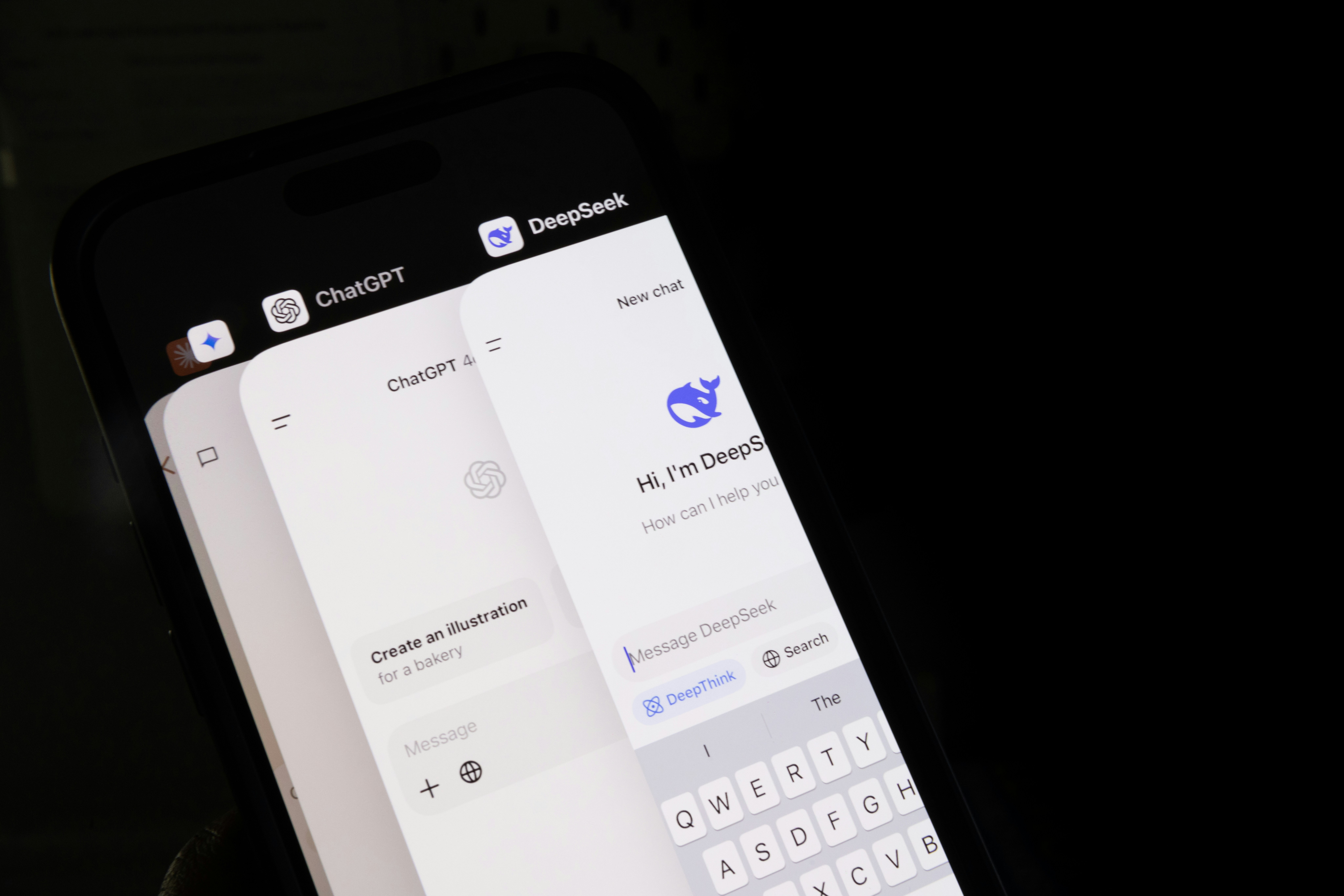
If you are a Chinese exporter or manufacturer about to sign or renew a GEO (Generative Engine Optimization) contract, there are exactly three numbers that tell you whether it is working: appearance rate (how often your brand shows up when an AI model answers a buyer's question), citation rate (how often the model links to your own website as its source), and share of voice (what percentage of all brand mentions in those answers are yours versus competitors'). Every one of these should be tracked per model, per week. Any report that cannot show you these three numbers, broken down by ChatGPT, Gemini, Claude, Perplexity and Google AI Overview separately, is not a GEO report. It is a sales deck.
This matters more for Chinese companies than most, because the AI models overseas buyers actually use, ChatGPT, Gemini, and Claude, are not the ones your domestic team uses day to day [nanjingmarketinggroup.com][moveo.ai]. That gap is exactly where good reporting earns its keep.
TL;DR
The three numbers that define GEO performance are appearance rate, citation rate, and share of voice, each tracked per AI model and per week.
A GEO report is only as credible as its prompt set. Without the 50 to 70 actual prompts used, the numbers cannot be audited or reproduced.
Different models cite different sources: ChatGPT leans on Wikipedia and authoritative publishers, Perplexity favors Reddit and academic sources, Google AI Overview weights traditional ranking signals plus Reddit and YouTube, Claude prefers press and official documentation, and Gemini relies on the open web with Google's E-E-A-T weighting.
One model moving before the others is normal, not a red flag. A real decline shows up as a multi-week, multi-model trend, not a single weekly dip.
Month one is about baseline and first appearances. Month three is about consistency and citation depth. If nothing has changed by month three, that is the conversation to have before renewal.
About the Author: This article is written from Simaia's operating experience running weekly AI-visibility reporting for B2B exporters and manufacturers across APAC, including Chinese companies selling into North America, Europe, and Australia through ChatGPT, Gemini, Claude, Perplexity, and Google AI Overview.
What Are the Three Numbers That Actually Prove GEO Is Working?
A credible GEO report answers one question directly: when a real overseas buyer asks an AI model about your category, does your company show up, does the model cite your own pages, and how much of that visibility is yours versus a competitor's? Those three questions map to three metrics.
Appearance rate: the percentage of prompts in the test set where your brand is mentioned anywhere in the model's answer, whether cited or not.
Citation rate: the percentage of prompts where the model links directly to a page on your own domain as a source, not just a mention of your name.
Share of voice: of all the brand mentions across the answer set (yours and competitors'), what share belongs to you.
These are distinct measurements and a report that only gives you one of them is giving you a partial picture. A brand can be mentioned often (high appearance rate) without ever being cited (low citation rate), which usually means the model knows of you but does not trust your site enough to link to it. That distinction is the difference between "AI knows your name" and "AI sends buyers to your website."
Why Is the Prompt Set the Denominator That Makes or Breaks the Report?
Every one of those three metrics is a percentage, and a percentage is meaningless without knowing what it is a percentage of. That "of what" is the prompt set: the actual list of questions run against each model to generate the numbers.
A sound prompt set for a B2B exporter typically runs 50 to 70 prompts, built from the real questions overseas buyers ask, not questions the vendor thinks sound good. These should be split by buyer intent: sourcing questions ("who are reliable manufacturers of X in China"), comparison questions ("best suppliers of X for European buyers"), diligence questions ("is [company] a legitimate supplier"), and category questions ("how to source X from Asia"). A report built on 70 sourcing prompts and zero diligence prompts will overstate visibility, because diligence questions are where citation rate tends to be lowest and hardest to earn.
The practical test before you sign or renew: ask for the prompt list. If the vendor cannot produce it, cannot tell you how many prompts per intent category, or reruns a different set every month so month-over-month comparison is impossible, the appearance rate and citation rate numbers they are showing you are not auditable. You cannot verify a percentage without the denominator, and you cannot compare week 4 to week 12 if the questions changed in between.
How Do You Read the Three Metrics With a Worked Example?
Building on the prompt set above, here is how the three numbers come together in practice. The figures below are an illustrative example only, not a benchmark or client result.
Metric | Week 1 (example) | Week 8 (example) | What it means |
|---|---|---|---|
Appearance rate | 8 of 60 prompts (13%) | 27 of 60 prompts (45%) | Brand now surfaces in nearly half of relevant buyer questions |
Citation rate | 2 of 60 prompts (3%) | 14 of 60 prompts (23%) | Own-domain pages are increasingly trusted as the source, not just mentioned |
Share of voice | 6% of all brand mentions | 22% of all brand mentions | Growing slice of a competitive answer, not just growing in isolation |
Read across the row, not down the column. A rising appearance rate with a flat citation rate means the model has learned your name (often from press or third-party mentions) but has not yet started linking to your own content, which usually points to a content or E-E-A-T signal gap on-site rather than a discovery problem. A rising share of voice with a flat or falling appearance rate is nearly impossible and, if you see it, is worth questioning the math.
Why Does the Per-Model Breakdown Matter, and Why Is One Model Moving First Normal?
Aggregating all five models into one blended number hides the thing that actually matters for a Chinese exporter selling overseas: each model pulls from a different part of the web, and buyers do not distribute evenly across models depending on where they are. ChatGPT tends to prioritize Wikipedia and authoritative publishers. Perplexity favors Reddit, academic sources, and recent niche blogs. Google AI Overview leans on traditional ranking signals alongside Reddit and YouTube. Claude prefers established press and official documentation. Gemini relies on the open web with Google's own E-E-A-T weighting.
That means it is entirely normal, and expected, for one model to show movement in appearance rate or citation rate weeks before the others do. If a press placement lands in a well-known outlet, Claude and ChatGPT may pick it up within a couple of reporting cycles because they weight press and established publishers heavily. Perplexity may lag until a Reddit thread or niche technical post references the brand, because that is the source type it favors. A report that shows uniform movement across all five models in the same week should raise questions, not confidence, because it does not match how these models actually source information.
There is also a geography layer specific to Chinese companies here: buyers in different markets reach for different models depending on availability. ChatGPT access varies by market and has specific restrictions in some regions, including Hong Kong, where it remains officially unavailable to users with local phone numbers or IP addresses as of 2026 [digitalinasia.com]. Meanwhile domestic Chinese platforms operate under a separate regulatory system, with over 820 large language models filed with the Cyberspace Administration of China as of early 2026 [iclg.com], and China's AI ecosystem, including platforms like Doubao, functions largely independently of the overseas stack [nanjingmarketinggroup.com]. A GEO report aimed at overseas buyers should be measuring the models those buyers actually use, not the ones available domestically.
What Should the Numbers Look Like in Month One Versus Month Three?
A separate but related question is what "normal progress" looks like on a timeline, since a single snapshot cannot tell you if a program is working. In the first month, expect appearance rate to move first and fastest, since it only requires the model to have encountered your brand name somewhere, including press, directories, or third-party mentions. Citation rate typically moves slower in month one because models need repeated, consistent signals from your own domain before they trust it enough to cite it directly.
By month three, the read changes. Appearance rate should be stabilizing or continuing to climb, but the more important number is whether citation rate has started catching up to it. A gap that persists between a high appearance rate and a low citation rate past month three usually means the on-site content is not yet formatted or authoritative enough for models to extract and cite confidently, which is a content and structure problem, not a discovery problem, and worth raising directly with whoever is producing the content.
What Should You Ask Before Renewing a GEO Contract?
Everything above points to a short list of questions that separate a real report from a reassuring one:
Can you show me the exact prompt list, split by buyer intent, that generated these numbers?
Are appearance rate, citation rate, and share of voice reported separately per model, per week, or only as a blended average?
Can you show me week-over-week trend lines, not just a single before-and-after snapshot?
When one model moved and others did not, can you explain why, based on that model's known source preferences?
What is the citation rate specifically, not just the appearance rate, and how has it changed since month one?
Simaia runs this exact reporting structure as a standard part of its AI search audit and ongoing engagement, tracking appearance rate, citation rate, and share of voice weekly across ChatGPT, Claude, Gemini, Perplexity, and Google AI Overview, with the full prompt set (typically 50 prompts) disclosed and reused consistently so the numbers are comparable over time.
Frequently Asked Questions
What is GEO reporting?
GEO reporting is the practice of measuring how often, and how favorably, AI models like ChatGPT, Gemini, and Perplexity mention or cite a specific brand when answering the questions real buyers ask, tracked as appearance rate, citation rate, and share of voice.
How is GEO different from Google AI Overview optimization?
Google AI Overview optimization is one part of a broader GEO program. It specifically involves earning citations within Google's AI-generated summary results, which lean on traditional E-E-A-T ranking signals combined with Reddit and YouTube content, whereas full GEO reporting also tracks ChatGPT, Claude, Gemini, and Perplexity, each with different sourcing behavior.
How many prompts should a GEO report be based on?
A workable range is 50 to 70 prompts built from real buyer questions, split across sourcing, comparison, diligence, and category intent. Fewer prompts make the percentages unstable week to week; a report with no disclosed prompt list cannot be audited at all.
Why does my brand show up on one model but not another?
Each model draws from different source types, so uneven movement across models is expected, not a sign something is broken, as long as the underlying content and press activity is consistent.
About Simaia
Simaia operates as an outsourced marketing team built specifically for B2B companies that want to be found by buyers using AI search tools rather than traditional search alone. It runs the full stack end to end: an AI search audit across ChatGPT, Gemini, Claude, Perplexity, and Google AI Overview, content written and placed on the sources each model trusts, and a website visitor identification tool that turns anonymous AI-referred traffic into named leads with company, contact, email, phone, and LinkedIn detail handed directly to sales. For companies evaluating whether their current GEO provider or in-house effort qualifies as one of the best AI SEO agency options available, the reporting standard above, weekly, per-model, prompt-disclosed, is the bar Simaia holds itself to as part of its own b2b lead generation ai service.
If you are about to sign or renew a GEO engagement and want a second opinion on what the report should look like, get in touch with Simaia at https://www.simaia.co/.
References
China GEO: How AI Search Is Changing Content Visibility | Nanjing Marketing Group (nanjingmarketinggroup.com)
Countries where ChatGPT is banned in 2026: full list (moveo.ai)
AI Regulatory Landscape and Development Trends in China (iclg.com)
Where is LLM Access Available Across Asia in 2026? ChatGPT, Claude, Gemini, and Chinese Models Tracker (digitalinasia.com)
Share this post



Getting leads from AI search shouldn't be your problem to figure out
Does AI even know
you exist? 🤔